

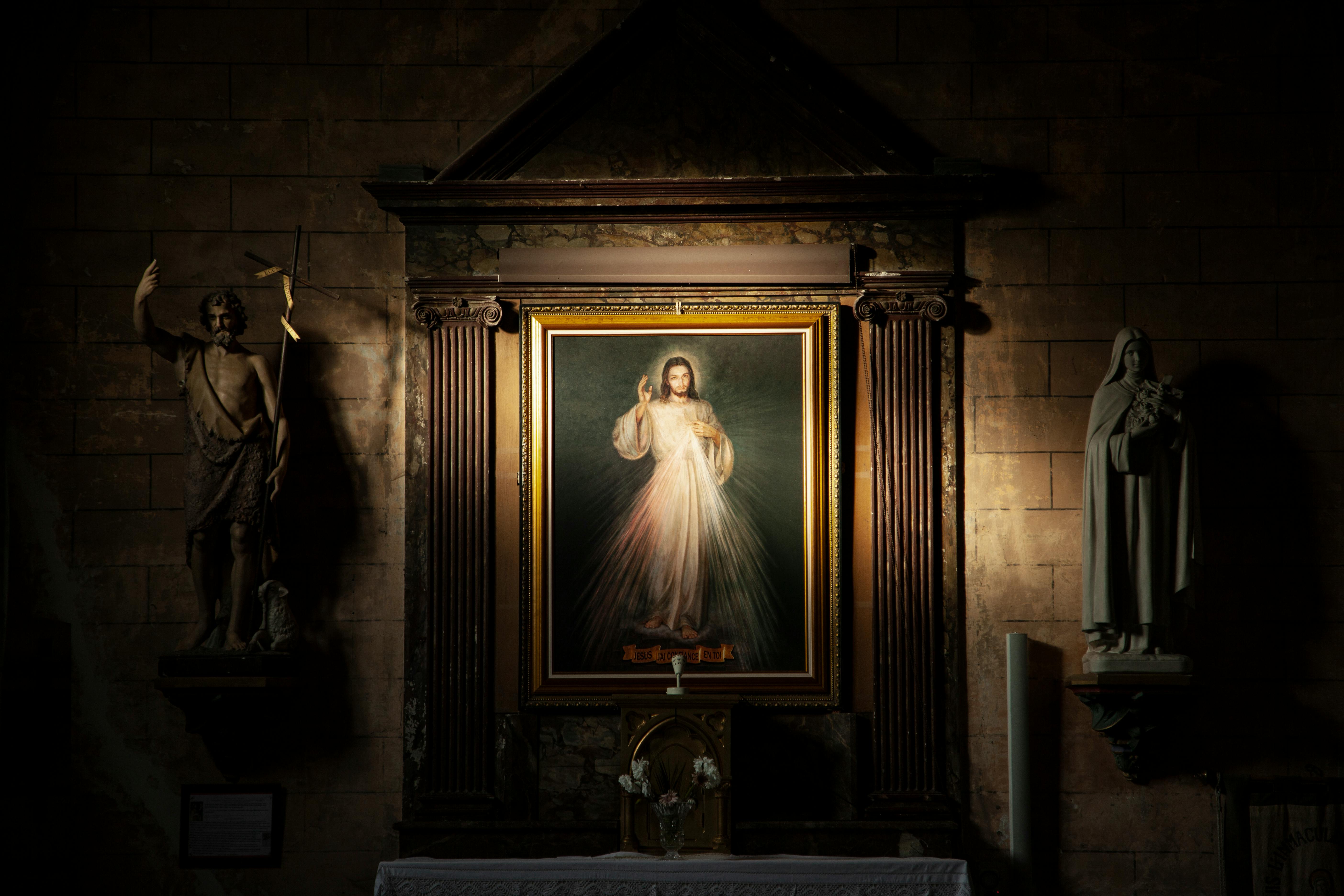
 Few doctrines shape the Christian faith more than Christology, the doctrine of Christ. What we believe about Jesus determines how we understand salvation, Scripture, the Trinity, discipleship, and ultimately the very nature of God Himself. Christology is not a side category of theology—it is the blazing center. We must get Jesus right. If we get Jesus wrong, we get everything else wrong. For this reason, the opening lines of Hebrews carry weight and authority that demand our attention:
 We must get Jesus right
The Son Reveals, Redeems, and Reigns:
A Christological Exploration of the Hypostatic Union in Light of Hebrews 1:1–3
Introduction:
Few doctrines shape the Christian faith more than Christology, the doctrine of Christ. What we believe about Jesus determines how we understand salvation, Scripture, the Trinity, discipleship, and ultimately the very nature of God Himself. Christology is not a side category of theology—it is the blazing center. We must get Jesus right. If we get Jesus wrong, we get everything else wrong. For this reason, the opening lines of Hebrews carry weight and authority that demand our attention:
In the past God spoke to our forefathers through the prophets at many times and in various ways, but in these last days he has spoken to us by his Son, whom he appointed heir of all things, and through whom he made the universe. The Son is the radiance of God’s glory and the exact representation of his being, sustaining all things by his powerful word. After he had provided purification for sins, he sat down at the right hand of the Majesty in heaven. Hebrews 1:1–3 (NIV84)
This passage serves as a theological anchor for understanding the nature of Christ. Jesus is not simply one revelation among many—He is God’s final and fullest revelation. He is not like God. He is not close to God. He is not a prophet who points to God. He is the radiance of God’s glory and the exact representation of His being. Jesus reveals the Father because He shares the Father's divine nature. And this divine nature is united, without confusion or separation, to His true humanity in what the early church called the hypostatic union.
Jesus Christ is fully God and fully man—the eternal Son who took on human flesh—not only as a matter of theological precision but because His divine-human nature is essential for the threefold purpose of His mission: to reveal the Father, to redeem humanity, and to reign as King over all creation.
The Eternal Son: Fully God
Long before the manger in Bethlehem, before angels broke through the night sky, and before any prophecy of the Messiah was ever spoken, the Son existed eternally with the Father. Hebrews opens with a bold and sweeping claim: God made the universe through the Son (Heb. 1:2). This means the Son cannot be a created being. You cannot be created through someone who is not yet in existence. John opens with the same statement: “In the beginning was the Word…and the Word was God” (John 1:1). Paul echoes the same truth in Colossians: “For in him all things were created…all things were created through him and for him” (Col. 1:16).
Jesus is not simply divine in function—He is divine in essence. He is the Second Person of the Trinity, equal with the Father in nature, attributes, and eternal existence. The early church called this the eternal generation of the Son, meaning that the Son is eternally from the Father, yet fully God in every way. This is why Hebrews calls Him the radiance of God’s glory. Radiance is not separate from its source—it expresses it. The Father is the source, and the Son is the shining forth of that same divine nature.
Recently, I illustrated this reality by comparing the Father to the composer of a symphony, and the Son to the music itself. The melody written in the Father’s heart becomes audible in the Son. This is how the New Testament speaks: the Son is the visible, audible, tangible self-expression of the invisible God.
He is the image of the invisible God.
He is before all things.
In Him all things hold together.
Jesus did not become God.
He did not grow into divinity.
He did not earn God-status.
He is God. Always has been. Always will be.
The Hypostatic Union: Fully God, Fully Man
The mystery at the core of Christian faith is not simply that Jesus is God. It is that the eternal Son became human—not temporarily, not symbolically, but in real flesh and blood. John captures this with breathtaking clarity: “The Word became flesh and made his dwelling among us” (John 1:14). The eternal Son, who existed before creation and through whom creation came into being, entered the very creation He made. He did not appear as a hologram, spirit, or angelic vision. He clothed Himself in humanity.
Theologians call this union of divine nature and human nature the hypostatic union—one Person, two natures, without confusion, mixture, division, or separation. Jesus did not cease to be God when He became human; He added humanity to His divinity. The church has always affirmed this as the Scripture reveal it.
Paul explains this union in Philippians 2, teaching that Jesus, “being in very nature God,” took on the form of a servant and was made in human likeness (Phil. 2:6–7). The early church used the Greek term kenosis (“emptied Himself”) to describe this, but the text does not mean Jesus emptied Himself of deity—it means He emptied Himself of divine privilege. He did not stop being God. He simply chose not to use His divine rights for His own advantage.
Recently, while preaching, I described the incarnation as the moment when “paper and proclamation became a person.” It’s like knowing someone online for years—hearing their voice, reading their posts—but then one day they walk into the room in the flesh. The profile becomes presence. This is what happened at the Incarnation. Eternal divinity stepped into human reality—not abandoning divinity, but embracing humanity.
And this matters. Because for Jesus to reveal God, He had to be God.
For Jesus to redeem humanity, He had to be human.
No other being in the universe could bridge that gap. Only the God-Man could.
The Son Reveals the Father
Jesus does not simply reveal information about the Father—He reveals the Father Himself. The prophets gave glimpses, signs, shadows, and promises, but Jesus gives us the substance. Every attribute of God finds its clearest expression in the Son. If you want to understand God’s compassion, look at Jesus touching lepers and sinners. If you want to understand God’s justice, watch Jesus overturn the tables in the temple courts. If you want to understand God’s patience, consider Jesus’ long-suffering with the disciples. If you want to understand God’s heart for the broken, listen to Jesus tell stories about lost sheep, lost coins, and lost sons. Jesus doesn’t just preach the Father’s love—He embodies it.
Whatever is true of the Father is also true of the Son, because they share the same divine essence, glory, and attributes. Jesus is not a lesser revelation or a different version of God; He is “God explaining Himself to us” in human form. Because Jesus shares the Father’s nature, He perfectly reveals the Father’s character.
The way Jesus reveals the Father also shows us God’s priorities. God did not choose to reveal Himself through political dominance, religious prestige, or overwhelming force. He revealed Himself through humility, proximity, and vulnerability. Jesus reveals that the Father is meek. The infinite God chose a finite body; the eternal God stepped into time. This tells us that God is not distant or detached—He is Emmanuel, “God with us.” Jesus shows us that God moves toward sinners, sits with the broken, welcomes the unworthy, and runs toward prodigals.
Many people imagine God as harsh, disappointed, or distant. Jesus corrects these distortions. “Jesus didn’t change God’s nature—He revealed it.” In Christ, we finally see God clearly. Without Him, we are guessing. With Him, we are beholding.
The Son Redeems Humanity
Jesus not only revealed God’s nature; He also redeemed humanity’s nature. Revelation alone could show us who God is, but redemption restores who we were meant to be. In order to take on sin, Jesus had to take on flesh. God became human so He could stand in our place. The One who knew no sin became sin for us so that in Him we might become the righteousness of God (2 Cor. 5:21). Only someone fully human could bear human sin, and only someone fully divine could bear it fully. The Son did not become less than God when He took on flesh, nor did He become something other than human. He became fully human while remaining fully God so that He could fully redeem.
Jesus’ humanity allowed Him to represent us; His divinity allowed Him to save us. If Jesus were only human, His death would have been noble but insufficient—He could die for one person, but not for all. If He were only divine, He could not die at all. But because He is both—God in flesh—His sacrifice is both possible and powerful. In His divine-human person, Jesus becomes the bridge between God and humanity. He stands where we could not stand and pays what we could not pay.
Jesus dismantled the works of darkness. His blood disarmed the enemy’s accusations. His resurrection crushed death’s power. His ascension enthroned Him over every ruler, dominion, and demonic force. Redemption is not simply the removal of guilt—it is the overthrow of evil. The Son steps into the battlefield of human sin and spiritual oppression and emerges victorious.
Yet redemption goes even deeper. Redemption is not simply Jesus erasing our guilt; it is Jesus restoring our humanity. Sin didn’t just make us guilty—it made us broken, enslaved, spiritually dead, and relationally severed from God. Humanity wasn’t just in need of forgiveness; we were in need of rescue and re-creation. Jesus doesn’t save us from a distance. He doesn’t shout instructions from heaven or send a spiritual survival manual. He enters the story Himself. The Redeemer becomes one of the redeemed so that He can bring humanity back to God.
The incarnation is the foundation of redemption. You cannot separate Bethlehem from Calvary. The manager points to the mission. Jesus took on flesh so He could take our place. He shared our humanity so He could bear our sin. Because Christ assumed the fullness of human nature—body, mind, emotions, and will—He redeems all of it.
Jesus redeems us through His obedience. Where Adam failed in the garden, Jesus succeeded in the wilderness. Where Israel grumbled in the desert, Jesus trusted the Father. His perfect obedience is part of our salvation. Paul teaches that “through the obedience of the one man the many will be made righteous” (Rom. 5:19). Jesus’ righteous life is credited to us just as His sacrificial death is applied to us. His obedience restores what human disobedience destroyed. Redemption is not a singular spiritual adaptation—it is a complete reversal.
Jesus redeems our identity -we become children of God.
Jesus redeems our purpose- we become ambassadors of Christ.
Jesus redeems our destiny- we inherit eternal life.
Jesus reveals our nature- we are made new.
The cross breaks the penalty of sin, the resurrection breaks the power of sin, and the Spirit breaks the presence of sin as He forms Christ within us. Redemption is Jesus taking everything sin ruined and making it whole again.
The Son Reigns
Jesus did not merely come to reveal the Father and redeem humanity—He came to reign as King. His life, death, resurrection, and ascension culminate in a declaration so sweepingly and authoritative that it reshapes the entire cosmos: “All authority in heaven and on earth has been given to me” (Matt. 28:18). Jesus is not waiting for authority; He possesses it. He does not aspire to kingship; He embodies it. His resurrection is His enthronement, and His ascension is His coronation. Jesus reigns right now—over heaven, over earth, over history, over nations, over creation, and over every spiritual power.
Paul affirms this when he writes that God “gave him the name that is above every name” and that “every knee should bow… and every tongue confess that Jesus Christ is Lord” (Phil. 2:9–11). The reign of Christ is not metaphorical or symbolic. It is absolute authority exercised by a real King whose sovereignty encompasses every realm, seen and unseen. His kingdom is not tied to earthly politics or national boundaries; it is the reign of God breaking into human history through the Son.
A crucial part of Christ’s reign is His absolute dominion over Satan. From the beginning of His ministry, Jesus confronted the powers of darkness head-on. In the wilderness, He stood toe-to-toe with the enemy and overcame him where Adam fell. Throughout His ministry, demons trembled before Him because they recognized His authority. They never negotiated with Him. They never resisted Him. They simply obeyed. Jesus’ command carried the force of divine sovereignty. He has no rivals.
The decisive victory came through His death and resurrection. Scripture does not soften this language: “The reason the Son of God appeared was to destroy the works of the devil” (1 John 3:8). The works of the devil—sin, accusation, deception, bondage, sickness, torment, and death—were crushed under the weight of the cross. At Calvary, Jesus did not merely weaken Satan; He disarmed him (Col. 2:15). He stripped the powers and principalities of their authority and exposed them as defeated foes. His resurrection shattered hell’s last weapon—death itself.
His reign means Satan’s dominion is broken, his accusations silenced, and his authority overturned. This victory is not only cosmic but personal. The reign of Christ is the reason believers walk in freedom from sin, freedom from shame, freedom from spiritual oppression, and freedom from fear. Wherever Jesus reigns, the enemy retreats.
Jesus is the King of the cosmos. Every molecule is held together in Him (Col. 1:17), every throne ultimately serves His purposes, and every timeline bends toward His sovereignty. He reigns not only above creation but within His people, advancing His kingdom through the Church—a kingdom marked by righteousness, peace, joy, truth, healing, justice, and power.
The reign of Christ is the guarantee that His redemptive work will reach its full completion. The King who crushed the serpent will one day eradicate evil entirely. The King who reigns in heaven will one day physically reign on earth. His kingship is the anchor of Christian hope:
Jesus reigns.
Jesus rules.
Jesus wins.
Conclusion
Christology sits at the center of the Christian faith. Everything we believe about salvation, Scripture, the Church, and the mission of God flows from what we believe about Jesus. Hebrews 1:1–3 anchors this truth with unmatched clarity: Jesus is the eternal Son, the radiance of God’s glory, and the exact representation of His being. He is not one revelation among many; He is God’s final and fullest revelation. In Him, God has spoken decisively. In Him, God has come near.
Understanding Jesus as fully God and fully man is essential for grasping the heart of the gospel. If Jesus is not fully God, He cannot reveal the Father. If He is not fully human, He cannot stand in our place. Only the God-Man can reconcile heaven and earth. The hypostatic union is not abstract doctrine—it is the foundation of redemption and the reason we have hope. Jesus reveals God because He shares God’s nature. Jesus redeems humanity because He shares our nature. And Jesus reigns because He stands as the exalted King over all creation.
Jesus reveals the Father with unmatched clarity. In Him, we see God’s compassion, justice, purity, and truth embodied. He corrects our distorted views of God and shows us the Father’s heart.
Jesus redeems us completely. His cross removes guilt, His resurrection breaks the power of death, and His Spirit restores our humanity. Redemption is not partial—it is transformative.
And Jesus reigns with absolute authority. His victory over Satan is total, His dominion over creation complete, and His kingdom advancing through His people.
In Christ, we see God.
Through Christ, we know God.
With Christ, we walk with God.
And under Christ, we live as citizens of an eternal kingdom.
This is why we preach Christ.
This is why we study Christ.
This is why we worship Christ.
He is the Son who reveals, redeems, and reigns—forever.
_______________________
The Holy Bible, New International Version. Grand Rapids, MI: Zondervan, 1984.
Towns, Elmer. Theology for Today. Mason, OH: Cengage Learning, 2008.